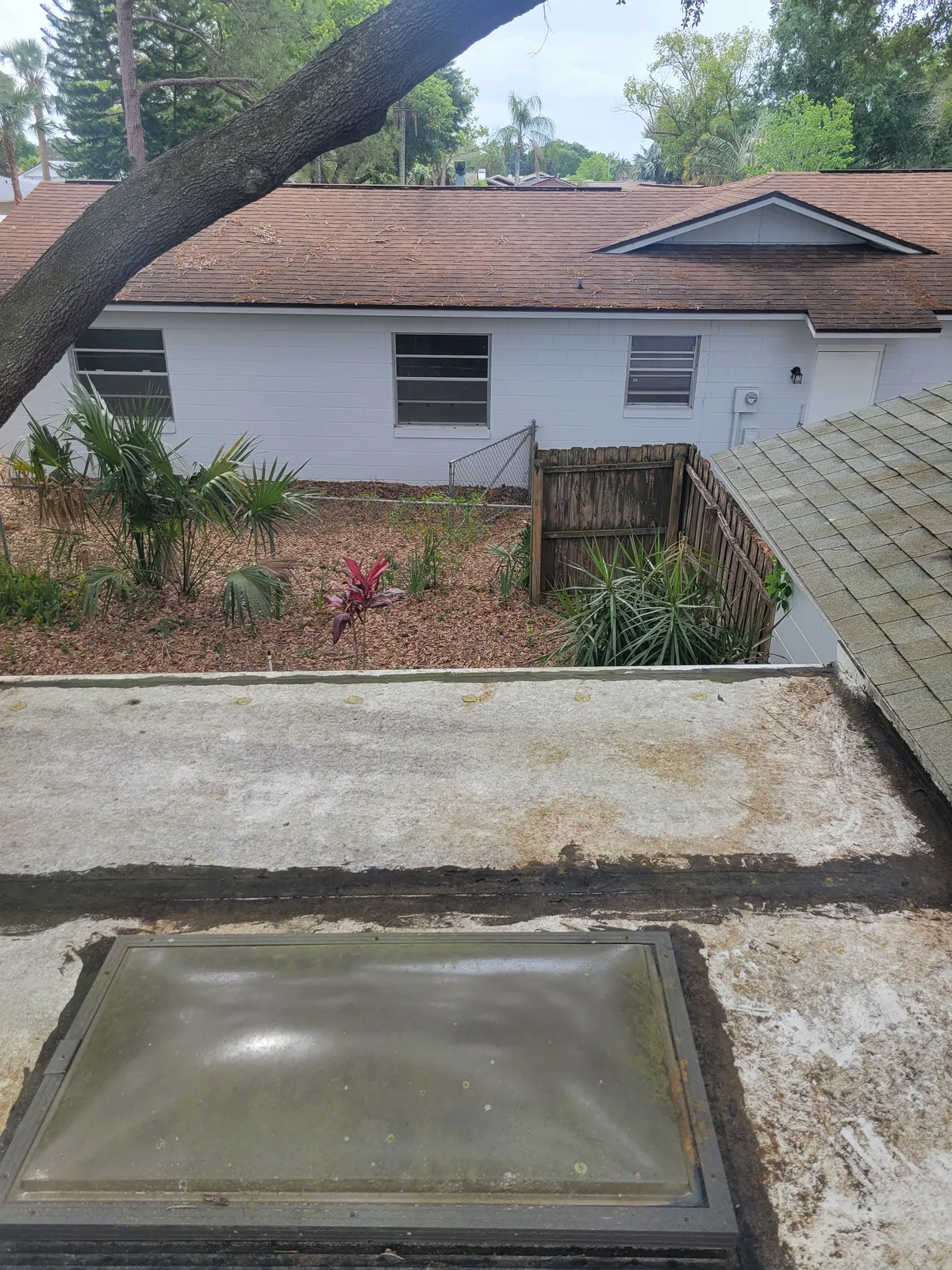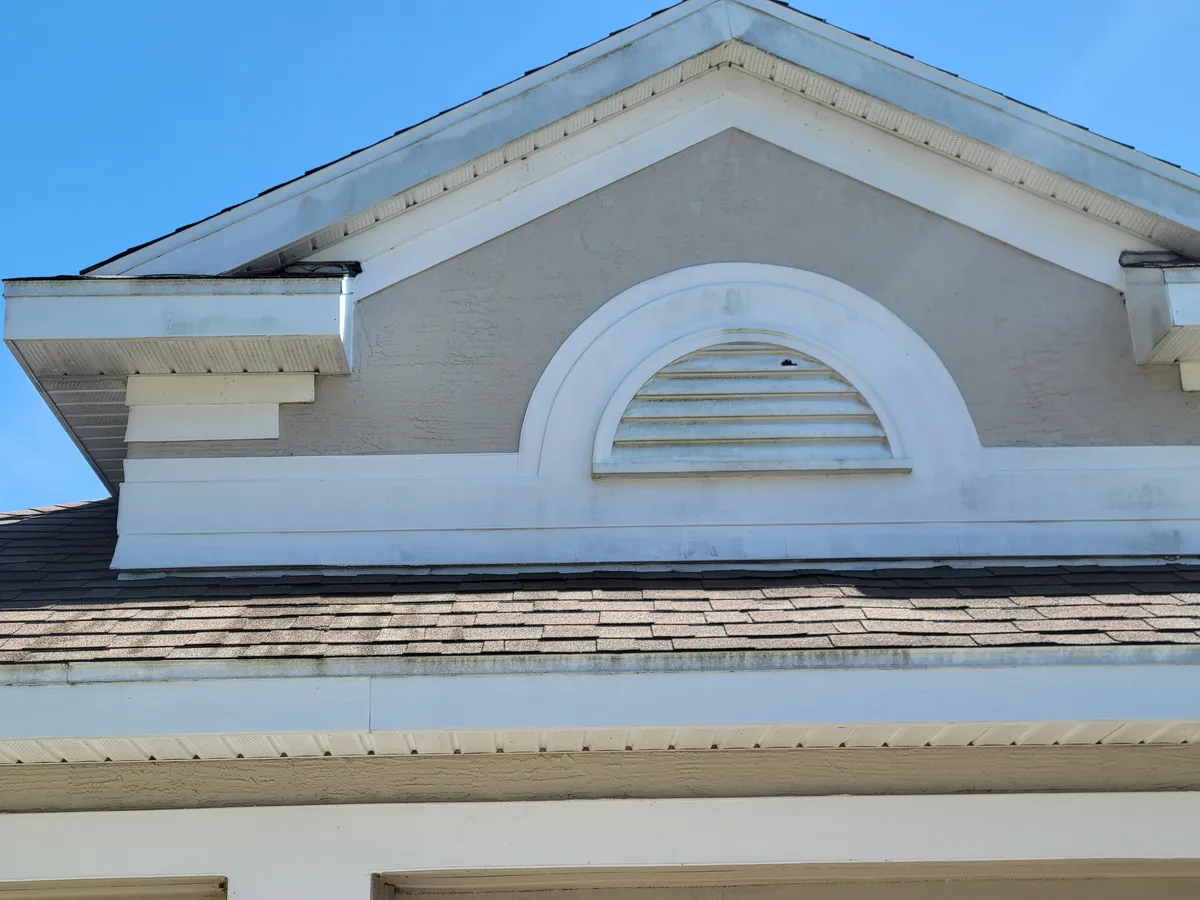
Most of the houses we wash in Central Florida are stucco, and stucco is the surface most likely to get damaged by the wrong cleaning method. The texture that gives stucco its look also traps moisture and gives algae and mildew a place to root, and a rented pressure washer is the fastest way to ruin that finish while trying to clean it.
Below: what’s growing on Florida stucco, why high pressure is the wrong tool for it, and how to tell when the job belongs to a pro.
Why Stucco Can’t Be Cleaned Like a Driveway
Stucco is a textured cement-based coating, and that texture is full of tiny pores and ridges. On a driveway or a paver patio, those pores are a problem the pressure washer solves: up to 3,000 PSI blasts ground-in dirt out of concrete without hurting anything. Point that same pressure at a wall and it does the opposite. High pressure etches the stucco surface, breaks down the texture, and in bad cases blows loose aggregate right out of the finish, leaving an uneven surface that stains and streaks faster than it did before. On homes with EIFS (synthetic stucco over a foam insulation board), the risk is worse: enough pressure can drive water behind the finish coat and into the insulation layer, where it has no way to dry out.
None of that damage shows up as “the wall looks clean now.” It shows up weeks or months later as a wall that looks blotchy, pitted, or stained in a new pattern, and by then the fix is a repair, not a cleaning.
What’s Growing on Florida Stucco
The green streaks, gray-brown discoloration, and black patches that build up on stucco walls are biological growth: algae, mold, and mildew, usually all three at once. They root into the texture rather than sitting on top of it, which is why a garden hose does nothing and why the growth comes back fast if the cleaning only knocks the surface layer loose instead of killing it.
Florida’s climate is about as good as it gets for this kind of growth. The NOAA's state climate summary for Florida describes Florida as the most humid state in the nation, with statewide annual precipitation averaging 53.7 inches, most of it falling June through September. The EPA’s guidance on mold and moisture puts the underlying mechanism simply: none of the many types of mold grow without water or moisture, and moisture control is the key lever for controlling it. A stucco wall in Central Florida rarely gets more than a few dry days in a row, especially on north-facing elevations, under tree shade, or near an irrigation head that keeps the same section damp on a schedule. Those are consistently the spots that stain first and worst.
Worried about your stucco?
We soft wash every house exterior, under 500 PSI, so the pressure never gets high enough to etch the finish. Free estimates across Volusia, Seminole, and Orange counties.
Get a Free EstimateThe Right Way to Clean Stucco: Soft Washing
Low pressure paired with the right chemistry is what removes this growth without damaging the wall. Soft washingapplies a contractor-grade surfactant at under 500 PSI, lets it sit long enough to kill the algae and mildew at the root, then rinses it away at low pressure. There’s no mechanical force doing the work, so there’s no etching, no blown-out aggregate, and no water driven behind the finish. The chemistry kills the colony instead of just dislodging its surface layer, which is also why a soft wash holds up longer than a pressure wash would even if the pressure wash didn’t damage anything: the growth doesn’t just get knocked loose, it gets killed.
A full soft wash on a single-story stucco home, roofline to foundation, typically runs $250 to $500. Two-story homes and heavily stained exteriors run toward the higher end. Every estimate is done on site with an exact price before anyone starts.
DIY vs Calling a Pro
Light dust or pollen film on stucco can usually be rinsed off with a garden hose and a soft brush, no chemicals needed. Past that, the calculation changes:
- Renting a pressure washer for stucco is a real risk. Most rental units put out up to 3,000 PSI, and there’s no dial that makes that safe for a textured wall. If the tip gets too close, held too long in one spot, or angled up under an eave or lap, the damage is immediate and permanent.
- Killing algae and mildew takes the right solution, not more pressure. A consumer-grade cleaner sprayed from a hose-end attachment might lighten surface staining temporarily, but without a surfactant designed to dwell and penetrate the texture, the root of the growth survives and the stain is back within weeks.
- Two-story walls and anything above reach change the math fast. Ladders and stucco don’t mix well, and the areas hardest to reach by hand are usually the same shaded, damp sections growing the heaviest algae.
- If an HOA has already sent a letter, or you’re prepping the house to sell, a professional house wash gets the whole exterior, including trim, soffits, and fascia, done in one visit instead of a partial DIY pass at just the visible wall.
How Often Stucco Needs Washing in Florida
Most Central Florida stucco homes need a full wash every 12 to 18 months. Homes under heavy oak canopy or close to a canal collect growth faster and may need it closer to once a year. Waiting past that window doesn’t just look worse, it gives the growth more time to work into the texture, which makes the eventual cleaning take longer and, in neglected cases, can leave discoloration that a wash alone won’t fully lift.
If you’re not sure which method belongs on which part of your house, our guide to pressure washing vs. soft washing breaks down which surfaces take high pressure and which ones need the soft wash treatment stucco requires. We offer free, on-site estimates across Volusia, Seminole, and Orange counties, with an exact price given before any work starts.