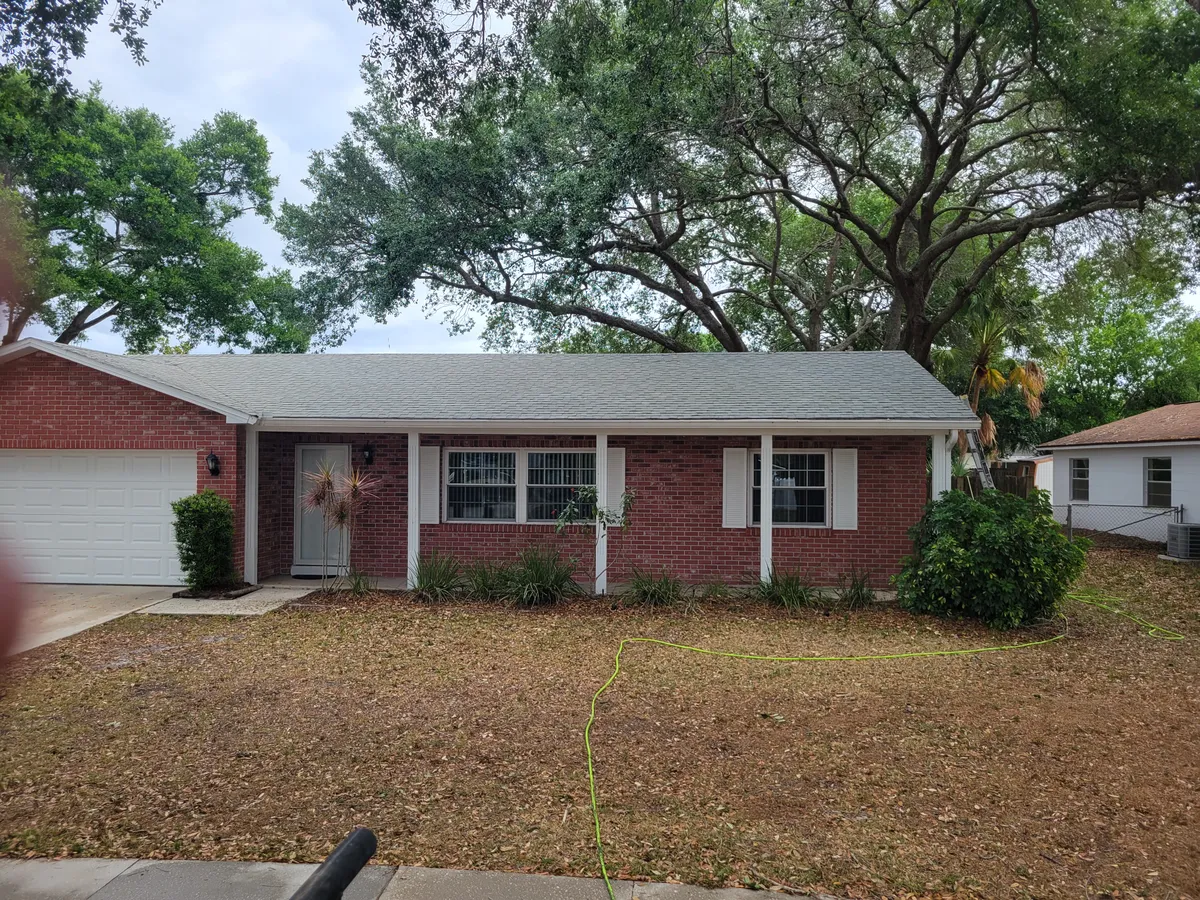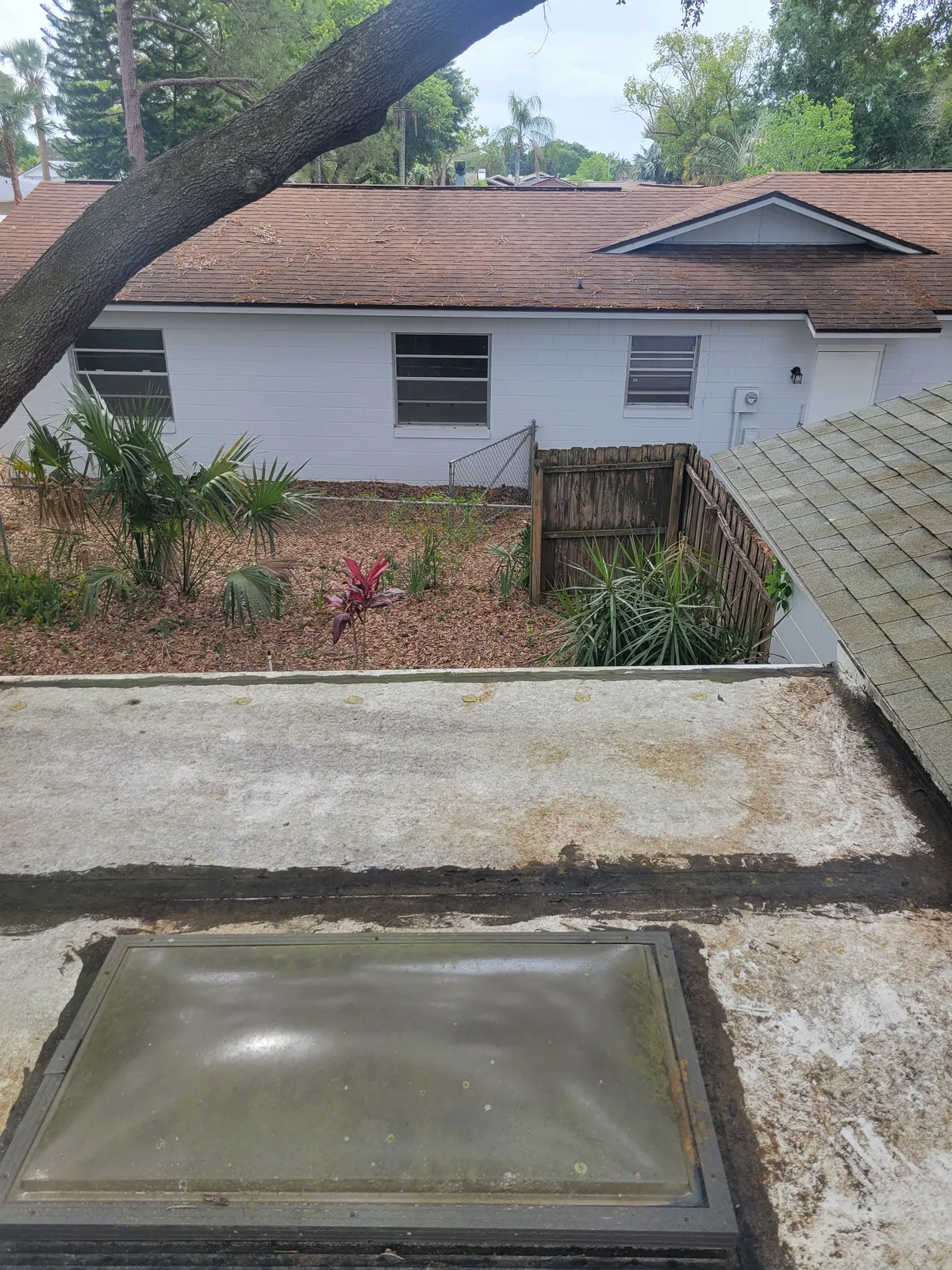
The dark streaks running down a Florida roof are a colony of bacteria, not dirt, soot, or mold. The fix most homeowners reach for first, a rental pressure washer, damages the roof instead of cleaning it.
Below: what’s growing up there, why pressure washing backfires, and the method that removes it without putting the roof at risk.
It’s Not Dirt. It’s a Living Colony.
The black streaking on asphalt shingle and tile roofs across Central Florida is caused by Gloeocapsa magma, a species of cyanobacteria. Cyanobacteria are bacteria, not algae, mold, or mildew, though the three often grow side by side on the same roof and get lumped together as “roof algae.” Gloeocapsa magma feeds on the limestone filler used in asphalt shingles and on the moisture that collects on tile. As the colony matures it produces a dark, UV-protective sheath, and that sheath is what you’re seeing as the black streak.
- A hose will not touch it. Dirt sits on top of a surface and rinses away. This colony is rooted into the shingle or tile surface itself.
- It spreads with water. The streak pattern follows the path water takes running off the roof, which is why staining usually starts at the ridge or a vent and fans out downhill from there.
- Shade keeps it alive. North-facing slopes and sections under tree canopy stay damp longer after a rain, so they develop streaking first and heaviest.
- It’s contagious, roof to roof. Spores travel on wind and on birds, which is part of why entire streets of similarly-aged roofs tend to stain around the same time.
Why Pressure Washing a Roof Makes It Worse
Once a homeowner sees black streaks, the instinct is to rent a pressure washer and blast the roof clean. On a driveway that works. On a roof it does two things wrong at once.
First, it doesn’t solve the actual problem. High-pressure water knocks the visible surface layer of the colony off the shingle, but it doesn’t kill the bacteria rooted into the material. The stain looks gone at first, then the colony that survived underneath regrows and the streaking comes back, often faster and heavier than before because the cleaning also strips away some of the shingle’s protective surface.
Second, and more serious, high pressure physically damages the roof. The Asphalt Roofing Manufacturers Association (ARMA)is blunt about it: “Never use a pressure washer to clean an asphalt shingle roof as this will cause granule loss and very likely premature failure of the roof system.” Those granules are the layer that protects the asphalt underneath from UV breakdown. Strip them off with a pressure washer and the roof ages faster everywhere the water touched, not just where the streaking was. On tile roofs, high pressure can crack tiles, dislodge them, or force water up under the tile and underlayment, which shows up later as an interior leak with no obvious connection to the cleaning that caused it.
Black streaks on your roof?
We soft wash every roof, the method that removes the growth without the damage a pressure washer causes. Free estimates across Volusia, Seminole, and Orange counties.
Get a Free EstimateWhat ARMA Recommends Instead
ARMA’s own guidance for removing algae and moss from an asphalt shingle roof is a low-pressure wash: apply a cleaning solution, let it dwell on the surface for 15 to 20 minutes so it has time to work, then rinse at low pressure rather than blast it off. That dwell-and-rinse approach, not pressure, is the soft wash method. It’s the same principle behind every soft washingjob we run: a contractor-grade solution applied under 500 PSI does the cleaning, and a gentle rinse removes the residue once the bacteria is dead. The roof comes out clean without granule loss, without cracked tile, and without the colony’s root structure surviving to regrow.
Why Florida Roofs Get This So Often
Central Florida gives Gloeocapsa magma almost everything it needs to thrive year-round. According to NOAA's state climate summary for Florida, Florida is the most humid state in the nation, and statewide annual precipitation averages 53.7 inches, with the heaviest rain falling June through September. A roof here rarely gets a long enough dry stretch to fully dry out between storms, especially on shaded or north-facing sections, which is the condition this bacteria needs to establish and spread.
That’s also why a single cleaning isn’t a permanent fix. The climate doesn’t change, so the roof will host new growth again eventually. In Central Florida, we tell most homeowners to plan on exterior cleaning, including the roof, every 12 to 18 months. Heavy oak canopy or a shaded, north-facing slope tends to shorten that, so a roof in those conditions should get checked toward the earlier end of that window rather than waiting out the full 18 months.
When to Call a Professional
If you can see dark streaks from the ground, the colony has already had time to establish itself, and the sooner it’s treated the less of the shingle’s protective layer it has a chance to break down. A professional roof cleaning runs $300 to $600 for most Central Florida homes, done with the soft wash method exclusively, which keeps the pressure low enough to protect the shingles or tile while still killing the growth at the root. We offer free, on-site estimates with same-day response across Volusia, Seminole, and Orange counties, and give you an exact price before any work starts.
If you’re not sure whether your whole exterior, not just the roof, is due for a cleaning, our guide to pressure washing vs. soft washing covers which method belongs on which surface.