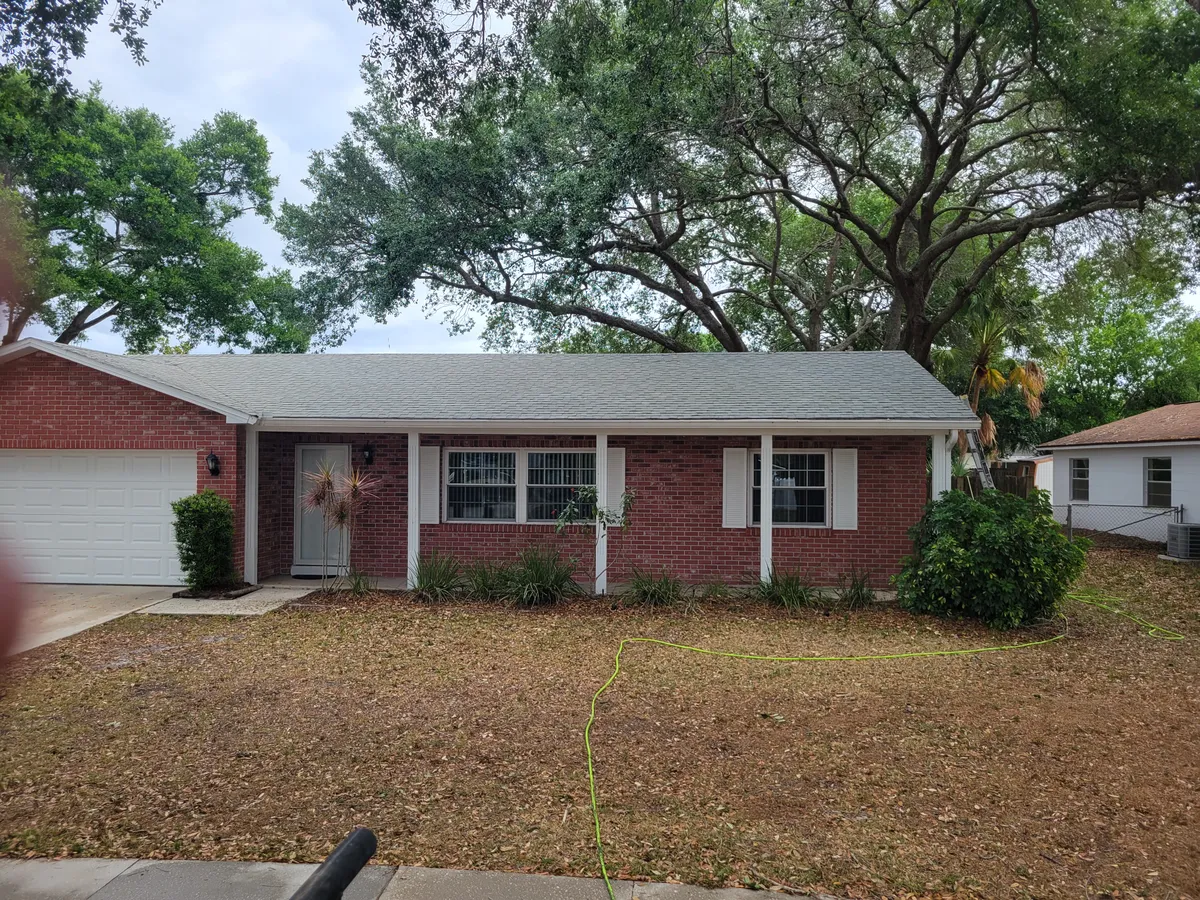
Pressure washing uses high-pressure water (up to 3,000 PSI) to clean hard surfaces like concrete driveways and pavers. Soft washing uses low pressure (under 500 PSI) with cleaning solutions to safely remove algae, mold, and mildew from delicate surfaces like roofs, stucco, and siding. Most Florida homes need both methods applied to different surfaces.
Below is a breakdown of each method, when to use it, and how we decide which approach is right for your property.
What Is Pressure Washing?
Pressure washing uses a high-pressure stream of water, up to 3,000 PSI, to blast away dirt, grime, oil stains, algae, and other buildup from hard surfaces. The cleaning power comes primarily from the force of the water itself.
Best surfaces for pressure washing: concrete driveways, sidewalks, patios, pool decks, pavers, and stone. These are dense, hard materials that can handle the force without damage.
Professional crews also use surface cleaners, which are flat spinning attachments that distribute the pressure evenly across a wide area. This prevents the streaking and etching that can happen when you use a standard wand tip and hover too long in one spot.
What Is Soft Washing?
Soft washing uses low pressure, usually no more than 500 PSI, combined with contractor-grade surfactants (many carry EPA Safer Choice certification) to kill and remove algae, mold, mildew, and bacteria from delicate surfaces. The cleaning power comes from the chemicals, not the water pressure.
The surfactant solution is applied to the surface and allowed to dwell for several minutes. During that time, it breaks down the organic growth at the root. Then a low-pressure rinse washes everything away. Because the chemicals do the heavy lifting, there's no need for force that could damage the material underneath.
Best surfaces for soft washing: stucco, vinyl siding, painted surfaces, wood fences and decks, roof shingles, roof tiles, screens, and pool cage enclosures.
When Should You Use Pressure Washing vs Soft Washing?
The rule of thumb is simple: hard, dense surfaces get pressure washed. Everything else gets soft washed. Here's a quick breakdown:
Not sure which method your home needs?
We walk your property and recommend the right approach for every surface. Free estimates, no obligation.
Get a Free EstimateCan the Wrong Method Damage Your Property?
Yes, and we see it more often than you might expect. Here are the most common types of damage from using the wrong method:
- Pressure washing stucco can blow holes in the finish, force water behind the wall, and cause mold growth inside the wall. Stucco is softer than most people realize.
- Pressure washing a roof can crack or dislodge shingles and tiles, void your roofing warranty, and push water under the underlayment where it causes leaks and rot. The Asphalt Roofing Manufacturers Association explicitly warns against high-pressure cleaning. Roof cleaning should always be done with a soft wash method.
- Pressure washing vinyl siding can warp, crack, or dent the panels and force water behind them, leading to moisture damage and mold in the wall cavity.
- Pressure washing painted surfaces strips the paint right off. What was supposed to be a cleaning job becomes a repainting job.
On the other side, soft washing concrete isn't dangerous, but it won't deliver the deep clean that hardscapes need. You'll end up with acceptable but mediocre results. High pressure is what it takes to strip ground-in tire marks, oil, and rust from a driveway.
How Do Professionals Choose Between Pressure Washing and Soft Washing?
When we come out for a free estimate, we walk your entire property and evaluate each surface individually. Most homes need both methods. A typical full-house cleaning might include pressure washing the driveway, sidewalks, and pool deck, and then soft washing the house itself, the roof, and the pool cage.
We also consider the condition of the surface. Older concrete with existing cracks may need a lighter touch. A roof with loose tiles gets extra care. Landscaping near the house determines where we direct runoff and how we protect your plants during the chemical application.
The goal is always the same: get the surface as clean as possible without causing any damage. The right method for the right surface, every time.
The Bottom Line
Pressure washing uses high-pressure water (up to 3,000 PSI) for hard surfaces like concrete driveways and pavers. Soft washing uses low pressure (under 500 PSI) with contractor-grade surfactants for delicate surfaces like roofs, stucco, and siding. Using the wrong method risks costly property damage. Most Florida homes need both methods applied to different surfaces during a single cleaning visit.