By Clark Sabo, Owner of Classic Pressure Washing (8+ years in Central Florida) | Published September 10, 2026
Vinyl and wood fences in Central Florida both grow the same green algae and dark mildew staining, but you can’t clean them the same way. Vinyl gets a soft wash: low pressure plus a cleaning solution that kills algae instead of just knocking it loose. Wood needs a lower PSI and a wider spray pattern, or you raise the grain and splinter the boards. Get either one wrong and you’re looking at a warped panel or a fence that never quite looks right again, a mistake our complete guide to pressure washing in Florida covers in more depth.
Here is what actually changes between the two materials, and why HOA communities like Winter Springs, with their strict architectural standards, tend to flag fence condition before almost anything else during a review cycle. Florida’s climate is especially favorable to the mold and mildew growth that discolors both materials, per the EPA.
Why Florida Fences Turn Green So Fast
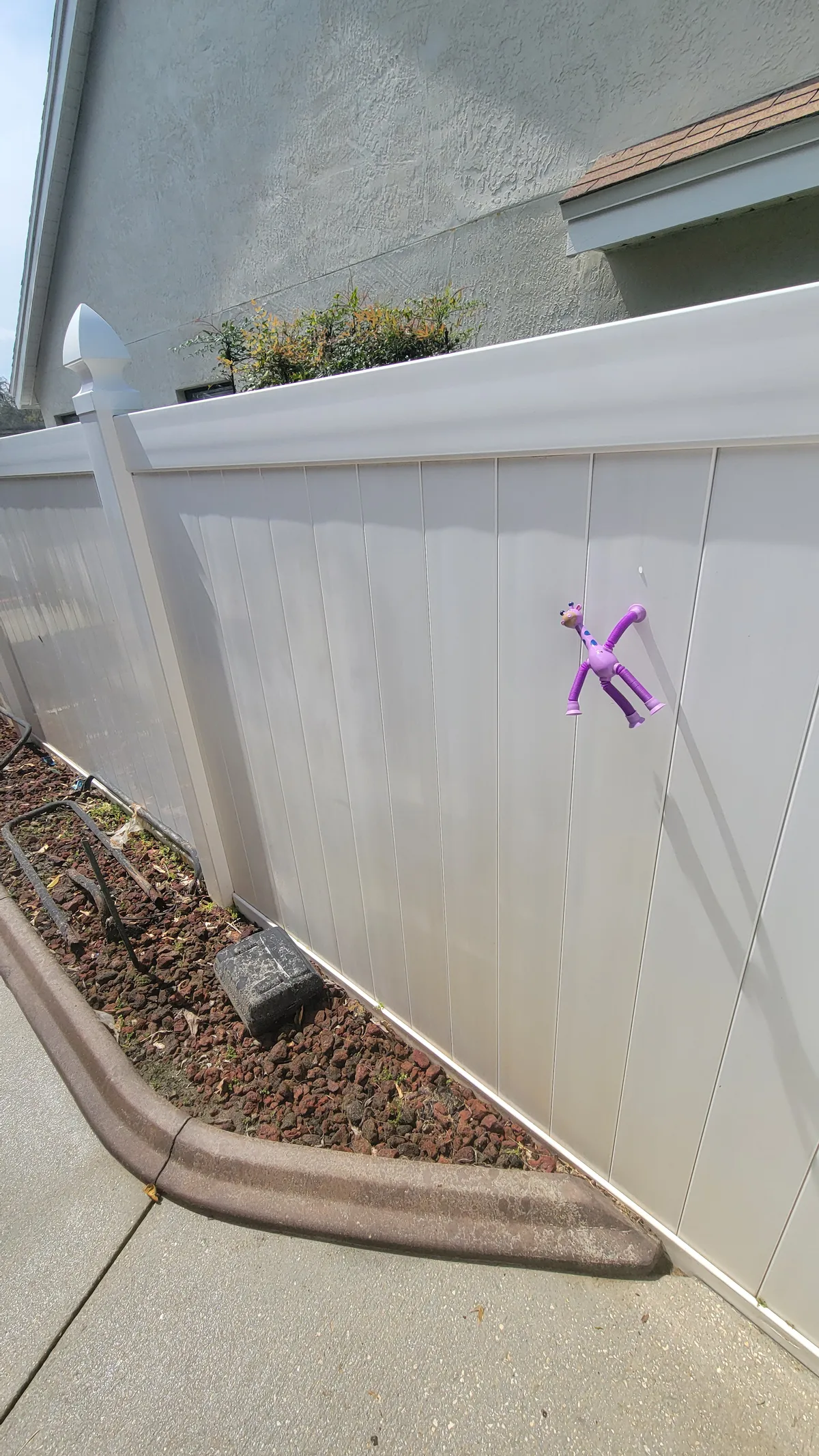
Central Florida’s humidity, heat, and frequent rain give algae and mildew everything they need to spread across a fence. Vinyl privacy fences are the most visible offender: the flat white panels act like a billboard for green algae, especially on the north-facing side where shade keeps the surface damp longer than the sun-exposed side. Wood fences develop dark mold staining that, left alone, penetrates the grain instead of sitting on top of it. The CDCnotes that mold and mildew grow fastest in warm, damp conditions, which describes most Florida backyards for much of the year. That’s why fences here need attention more often than the same materials would in a drier climate.
Cleaning Vinyl and PVC Fences
Vinyl and PVC panels get a soft wash treatment. A cleaning solution breaks down algae, mold, and mildew at the root, and a low-pressure rinse removes it. High pressure is the enemy here: it can warp or crack vinyl panels, and once a panel is warped, replacement is the only fix. The soft wash approach restores the original white without any of that risk, and it works on the entire section, posts and caps included.
Cleaning Wood Fences
Wood can be pressure washed, but the settings have to change. A lower PSI and a wider fan tip strip the buildup without raising the grain or splintering the surface. For older or softer wood like cedar or pine, a soft wash approach often works better than pressure at all. After cleaning, wood needs 48 to 72 hours to dry before any stain or sealant goes on, because trapping moisture under a fresh coat leads to peeling within months. If you are planning to restain, cleaning is the first and most important step: stain will not bond correctly to a surface that still has mildew or old degraded finish on it.
Aluminum and Chain-Link: A Different Problem Entirely
Aluminum and wrought iron fences do not grow algae the same way, but they do accumulate a chalky oxidation layer that dulls the finish over time. These get a gentle detergent rinse that removes oxidation and surface grime without stripping the powder coat or paint. Chain-link fences are more forgiving of pressure but still benefit from a cleaning solution on the coating to prevent rust from taking hold at weld points and connectors.
One crew, every fence material
Vinyl, wood, aluminum, and chain-link, all cleaned with the method built for that material. Most jobs run $150 to $400. Free estimates.
Get a Free EstimateHow Often Each Fence Type Needs Cleaning
Every 12 to 18 months is the standard recommendation for most Central Florida fences, regardless of material. Vinyl fences in shaded areas or near retention ponds show algae sooner and sit at the early end of that range. Wood fences need a fence cleaning before any fresh stain or sealant goes on, whatever the schedule. Aluminum fences generally go longer between cleanings unless they develop visible oxidation. If your community enforces an HOA exterior maintenance standard, fence condition is one of the most common items flagged during architectural review, and staying on a regular schedule is the simplest way to avoid a violation letter altogether.