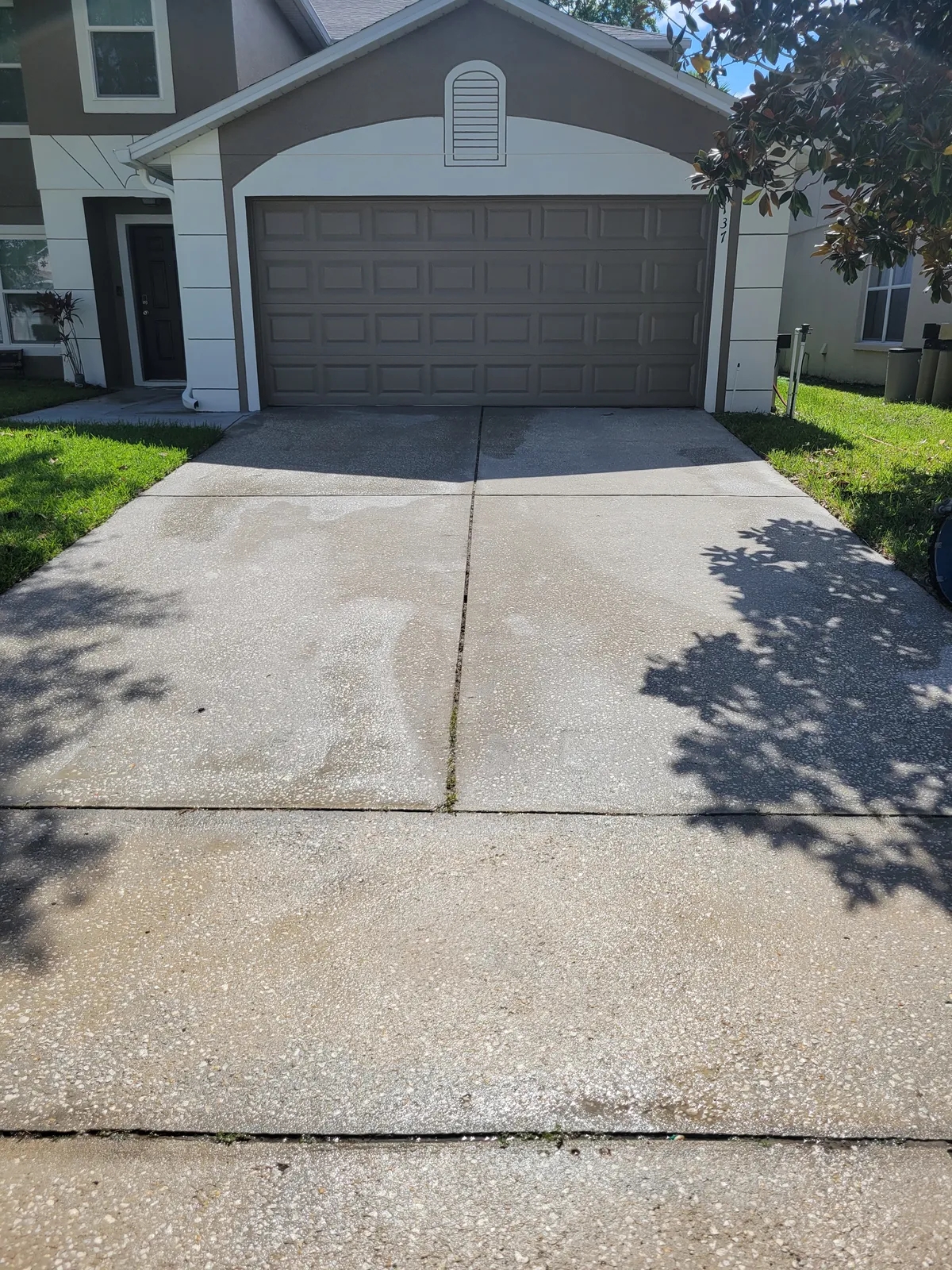
Rust stains on concrete, pavers, and stucco need a rust-specific treatment, not just pressure. The orange and brown streaks are iron oxide bonded into the surface, usually from irrigation overspray or a fertilizer application that drifted past the lawn edge. A properly formulated rust remover dissolves that iron deposit without bleaching the surface around it, which is the part a generic cleaner or a bleach-heavy mix usually gets wrong.
This guide covers why Florida properties get rust stains in the first place, why a pressure washer by itself will not touch them, how the treatment actually works on each surface, and what stops the stains from coming right back.
Why Florida Driveways, Pavers, and Stucco Get Rust Stains
Two sources cause most of the rust staining we see on hard surfaces across Volusia, Seminole, and Orange counties:
- Irrigation water from private wells. Florida groundwater carries dissolved iron. When a well-fed irrigation system sprays that water onto a driveway, paver patio, or stucco wall, the iron oxidizes on contact with air and dries into a reddish-orange stain in the exact spray pattern. The University of Florida IFAS Extension notes that staining from iron or manganese in irrigation water can start at concentrations as low as 0.3 parts per million, a level common enough in Florida well water that overhead irrigation routinely marks hard surfaces and foliage.
- Fertilizer that drifts past the lawn edge. Iron is a common fertilizer additive for keeping St. Augustine and other Florida lawns green. A broadcast spreader that overshoots the grass, or a bag that gets dragged across a driveway edge, leaves granules that oxidize into orange streaks the first time they get wet.
- Aging or misaligned sprinkler heads. A sprinkler body itself can rust and bleed onto nearby concrete, and a head aimed wrong sprays the same patch of hardscape every cycle. The EPA WaterSense program lists excessive pressure and misaligned coverage as a documented cause of sprinkler overspray, which is exactly the mechanism that puts well water on a driveway edge instead of the grass.
Why Pressure Alone Won't Remove Rust
Most dirt and algae sit on top of a surface, so pressure alone can knock it loose. Rust is different. Iron oxide forms a chemical bond with the concrete, pavers, or stucco underneath it, not just a layer of grime resting on the pores. Running a pressure washer over a rust stain rinses the surface around it and leaves the stain itself mostly intact, no matter how long the wand stays pointed at the spot. The EPA's secondary drinking water standards list iron at concentrations above 0.3 milligrams per liter as the threshold for reddish or orange staining, the same chemistry at work whether the iron lands on a sidewalk, a patio, or a white shirt in the wash.
Removing rust takes a product built for the job: an acid-based rust remover formulated for hardscape, applied directly to the stain so it can dissolve the iron deposit before any pressure gets involved. The pressure rinse at the end clears the dissolved residue off the surface. It is the last step, not the method doing the actual work.
Rust stains that won't budge?
We treat rust on driveways, pavers, and stucco across Volusia, Seminole, and Orange counties using rust-specific chemistry that won’t bleach the surface around it. Free on-site estimates.
See Driveway Cleaning ServiceHow Rust Is Removed Without Bleaching the Surface
On poured concrete, pavers, and other hard surfaces, we treat rust stains with an acid-based remover formulated specifically for hardscape, not a general-purpose cleaner. The treatment dissolves the iron deposit directly, then we pressure-rinse once the chemistry has finished working. Done correctly, this lifts the rust without leaving the bright white "ghost" patch that bleach-based products or the wrong acid concentration can leave behind, a mark that often stands out worse than the original stain.
Some rust has sat long enough to etch into the surface rather than just stain it, and in those cases the mark may lighten significantly without disappearing completely. We walk the property with you before starting and point out which stains we expect to lift fully and which are likely to leave a faint shadow, so there are no surprises once the job is done. This is the same driveway cleaning and concrete cleaning process we use on sidewalks, patios, pool decks, and paver surfaces throughout the service area.
Rust on Stucco Needs a Different Approach
A stucco wall is not a bare concrete slab. It carries a painted or textured finish coat, and an acid treatment strong enough to dissolve rust on a driveway can etch or discolor that finish. Rust and mildew staining on stucco gets removed with a soft wash instead, running under 500 PSI with a contractor-grade surfactant that breaks the stain loose chemically rather than through pressure. That keeps the finish intact while still pulling the rust mark off the wall. If an irrigation head near the house is responsible for the streak, we will point it out while we are there.
Stopping Rust Stains From Coming Back
Treating the stain without fixing the cause means cleaning the same spot again within a season. Two things to check once the rust is gone:
- Redirect any sprinkler head throwing water onto hardscape. A head aimed a few degrees off the lawn is usually the whole problem. Walk your zones during a cycle and watch where the spray actually lands.
- Keep fertilizer off the pavement. Set the spreader a pass short of the driveway edge, and sweep up any granules that land on concrete or pavers before the sprinklers or rain hit them.
Most Central Florida driveways and patios hold up well with a routine cleaning every 12 to 18 months. Catching a fresh rust stain early, before it has had a chance to set, is also what keeps it from needing anything stronger than the standard treatment.
