By Clark Sabo, Owner of Classic Pressure Washing (8+ years in Central Florida) | Published September 8, 2026
Concrete is porous, and in Central Florida that means every afternoon thunderstorm pushes water, algae spores, and dissolved minerals into the surface. Within 12 to 18 months of a professional concrete cleaning, an unsealed driveway can look like it was never touched, a timeline covered in more depth in our complete guide to pressure washing in Florida. Sealing right after cleaning fills those pores with a protective barrier and stretches the time before the next cleaning is needed.
Newer construction in communities like Winter Garden, where lighter-colored stucco and concrete finishes show buildup faster than older darker surfaces, tends to benefit the most from sealing early rather than waiting for the first visible signs of staining. Florida’s year-round humidity is a major driver of this, per NOAA’s climate data for the region.
Why the Timing Matters
Sealer bonds to the concrete surface itself. If there is algae, dirt, oil, or old degraded sealer still present, the new coat bonds to that layer instead of the concrete underneath and will peel or flake within months rather than years. The concrete also has to be completely dry, not just surface-dry, before sealer goes on. That is why sealing works best scheduled within a few days of a thorough cleaning: the surface is at its cleanest and driest right after the wash, and nothing has had time to grow back in between.
Acrylic Sealers vs Penetrating Sealers
There are two categories, and they protect concrete in different ways:
Acrylic sealers form a film on top of the concrete and come in wet look or matte finishes. Penetrating sealers soak into the concrete and react chemically with the minerals in the slab, blocking moisture without changing the appearance at all, which makes them the better choice for pool decks where added slipperiness is not an option.
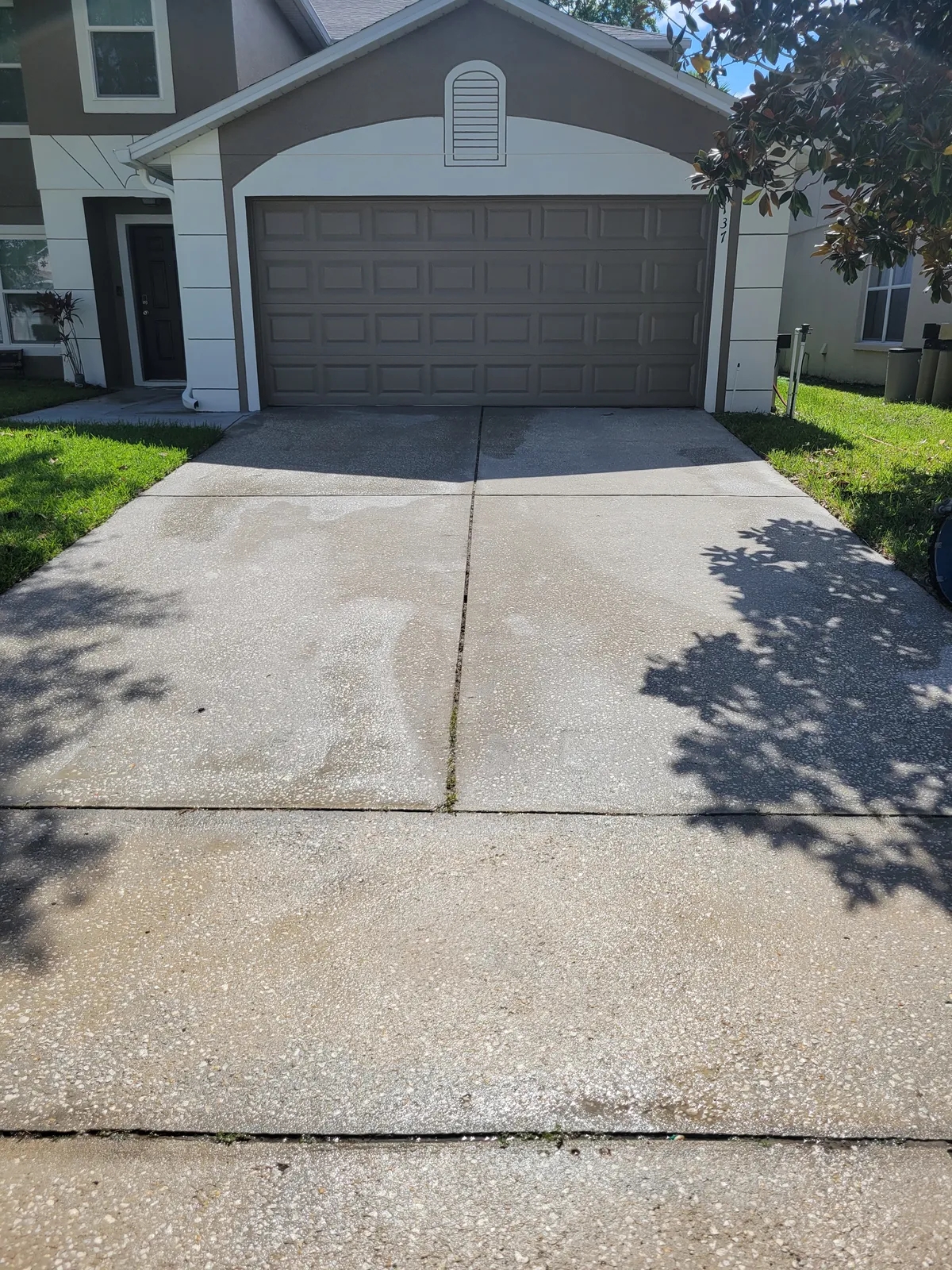
How to Seal a Driveway
The process has five steps, and skipping any one of them is usually why a sealing job fails within months instead of years.
Clean the driveway first. Sealer bonds to bare concrete, not to the algae, dirt, or old sealer residue sitting on top of it, so a thorough pressure washing always comes before anything else.
Let it dry completely. Not just surface-dry. Trapped moisture under a fresh coat of sealer causes it to peel or flake within months instead of holding for years.
Choose the sealer type. Acrylic gives you a wet look or matte finish that changes the surface appearance. Penetrating sealer protects from inside the pores without changing how the concrete looks at all.
Apply it in thin, even coats. A roller and sprayer combination gets consistent coverage, with extra attention at expansion joints and edges where water works its way in first.
Let it cure before you use the driveway. Most sealed driveways need 24 to 48 hours before vehicles go back on, though foot traffic can usually resume within 4 to 6 hours.
Follow that order on a driveway that was cleaned within the last few days, and the sealer bonds the way it’s supposed to.
Cleaning and sealing, scheduled together
We schedule both together so the sealer goes onto a fresh surface. Most sealing jobs run $300 to $600.
Get a Free EstimateHow Sealing Pays for Itself
Unsealed concrete in Central Florida generally needs cleaning every 12 to 18 months. Sealing pushes that out, since algae and mold can no longer take hold in the pores. A sealing job runs $300 to $600, and every cleaning cycle it stretches is money that stays in your pocket. The American Concrete Institutelists sealing as one of the most effective ways to extend the life of exterior concrete in humid climates like Florida’s.
What Sealing Will Not Do
Sealer is not a substitute for cleaning, and it will not hide staining that is already set into the concrete. It also is not permanent: sun, rain, and humidity wear sealers out faster here than in drier climates, so acrylic coatings on driveways need a refresh sooner than the same coating on a shaded patio. Think of sealing as protection for a clean surface, not a fix for a dirty one.