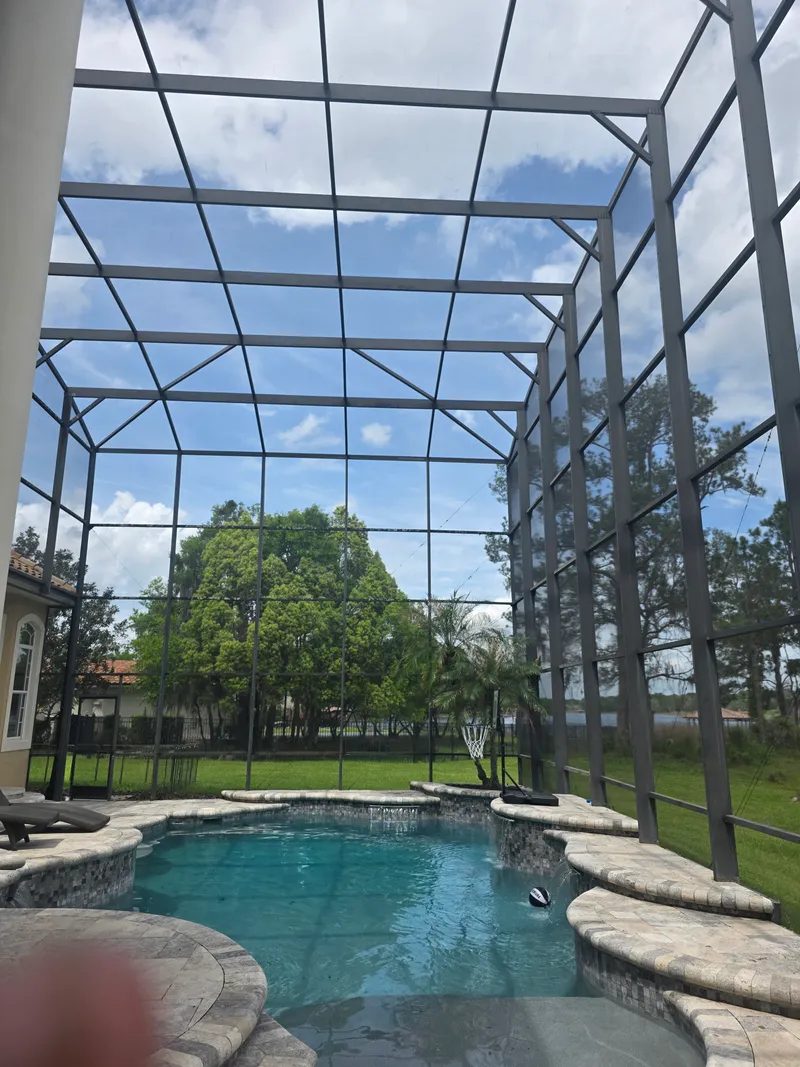
If your pool cage or lanai screen is reachable from the ground or a short step ladder and the green buildup is light to moderate, you can clean it yourself with a mild soap solution, a soft brush, and a garden hose. The two things that matter most: never use a pressure washer on the mesh, and never scrub hard enough to stretch the screen out of its spline channel.
This guide walks through the DIY process step by step, what you'll need, why Florida screens get dirty so fast, and the specific signs that mean it's time to stop and call a professional instead of risking a torn panel.
Why Pool Cages Turn Green in Florida
The green buildup on your pool cage screens is algae. Florida’s combination of high humidity, warm temperatures, and frequent rain creates ideal growing conditions for algae and mildew on every outdoor surface, including the mesh screens and aluminum framing of your pool cage or lanai enclosure.
Several factors accelerate the growth:
- Tree canopy and shade. Enclosures under oak, pine, or palm trees stay damp longer and collect organic debris that feeds algae. Neighborhoods like Sabal Point in Longwood, which back up to dense oak hammock, see faster buildup for this reason. River-adjacent communities like DeBary see the same effect from a different cause: morning fog off the St. Johns River keeps surfaces damp well into the day.
- Irrigation overspray. Sprinkler systems that hit the pool cage spray mineral-rich water onto screens, leaving deposits that algae clings to.
- North-facing panels. The side of the enclosure that gets the least direct sun stays damp longest and develops algae first.
- Proximity to water. Homes near lakes, retention ponds, or the St. Johns River in communities like Sanford and Deltona have higher ambient humidity that keeps screens wet.
What You'll Need
- Mild dish soap, diluted about a tablespoon per gallon of water, or a 10% white vinegar solution for heavier algae. Phifer, a major screen mesh manufacturer, gives the same gentle dish soap guidance for cleaning screen mesh and warns that a hard-bristle brush can damage it, the same principle that applies to pool cage screening.
- A soft-bristle brush or sponge, nothing abrasive. A stiff deck brush or anything with scouring pads will fray the mesh.
- A garden hose with a gentle shower or mist nozzle setting, not a jet or pressure washer.
- A spray bottle for applying solution to vertical screen panels, and a bucket for the brush.
- A stable step ladder, only if every part you need to reach is within comfortable, solid footing. Never lean on the screen itself for balance.
Step-by-Step DIY Cleaning
- 1. Rinse first, before adding any soap. A light hose-down loosens surface dirt and pollen so you're not scrubbing grit into the mesh.
- 2. Work top to bottom. Spray your soap or vinegar solution on the upper panels first and let it sit for a few minutes. Dirty runoff drips down onto panels you haven't cleaned yet, so starting at the bottom just means redoing your work.
- 3. Brush gently, in one direction. Light, even strokes along the mesh pattern lift algae without stressing the weave. Press hard in one spot and you risk popping the screen loose from its spline channel.
- 4. Rinse with a gentle hose spray, not a jet. This is the step that causes the most damage. Anything stronger than a garden hose on a soft setting can tear the mesh or blow it out of the frame.
- 5. Clean the aluminum framing separately. The horizontal beams and base channels hold the most grime. The same soap solution and a sponge work fine here, this part can take more scrubbing pressure than the screen can.
- 6. Clear the base channel. The bottom track where screens meet the deck collects leaves and standing water. The EPA notes that standing water is exactly what mosquitoes need to breed, so a quick sweep of the channel after rinsing is worth doing every time, not just when it looks bad.
When to Call a Professional Instead
DIY cleaning works well for screens you can reach safely and algae that hasn't fully bonded to the mesh. A few signs mean it's time to stop and bring in a pro instead of pushing further:
- Roof panels. Pool cage roof panels are typically 12 to 20 feet up. A ladder inside a screen enclosure is unstable, and a fall through a roof panel is a real risk. This part of the job calls for the extended soft-wash equipment a professional pool cage cleaning crew uses.
- Algae that doesn't lift after a gentle scrub. If it's bonded to the mesh fibers rather than sitting on the surface, more scrubbing just risks tearing the screen. A professional soft wash uses a stronger, mesh-safe solution that breaks the bond chemically instead of mechanically.
- Screens already loose, torn, or pulling out of the spline. Cleaning a compromised panel yourself usually makes the damage worse.
- A large enclosure or multiple panels at height. What's a 20-minute job on one reachable panel becomes an afternoon, and a real fall risk, across a full two-story lanai.
Rather skip the ladder?
We clean pool cages, lanais, and screen enclosures across Volusia, Seminole, and Orange counties, roof panels included. Low-pressure soft wash that won’t damage your screens.
See Pool Cage Cleaning ServiceWhen Is the Best Time to Clean a Pool Cage in Florida?
The best time to clean your pool cage or lanai enclosure in Central Florida is late spring or early fall. Spring cleaning, ideally in May after pollen season, removes winter and spring buildup before the summer rainy season accelerates algae growth. Fall cleaning, typically October or November, clears the summer growth and leaves your enclosure clean for the dry season when you use it most.
Pool cage cleaning bundles well with a house wash and driveway cleaning for a complete exterior refresh in a single visit. We serve homeowners across the area, including pressure washing in New Smyrna Beach and throughout Volusia County.