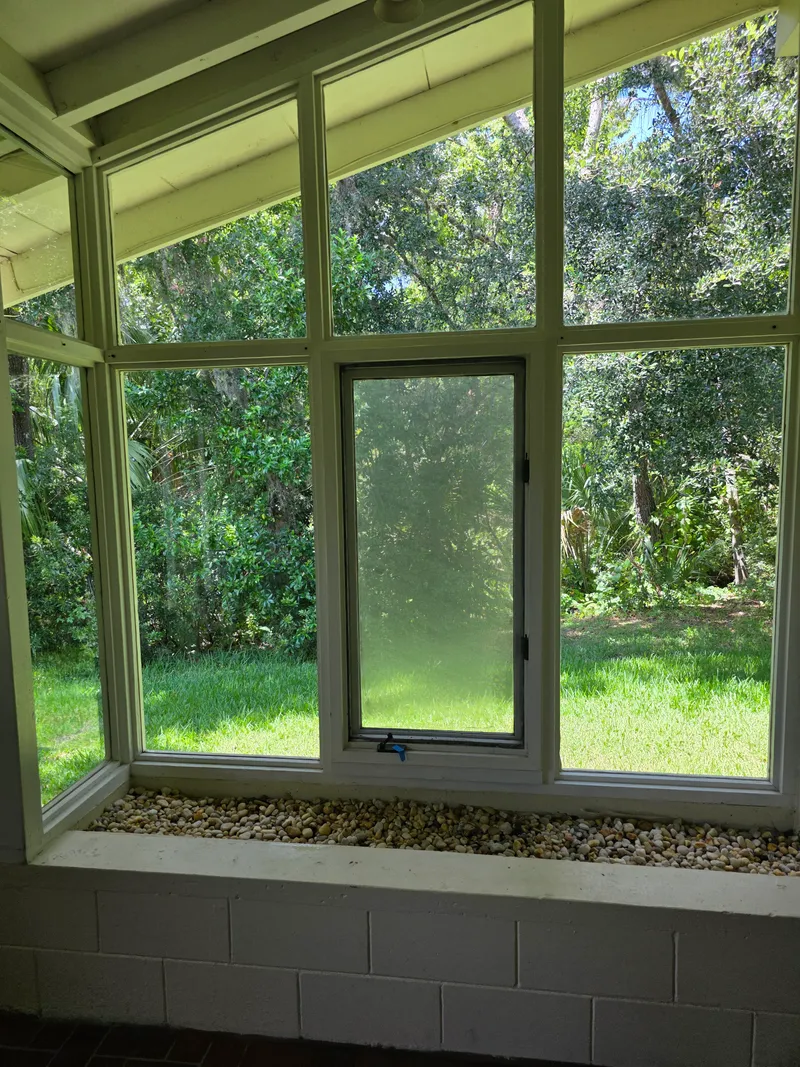
Hard water spots on windows come from sprinkler or irrigation overspray drying mineral deposits onto the glass. A specialized restoration compound, applied by hand, can pull those mineral deposits off before they etch the glass permanently. Timing is what decides whether a window is still fixable: a fresh deposit lifts off, while a deposit left on the glass long enough etches into the surface and cannot be cleaned away at that point.
This guide covers why Florida windows get hard water spots in the first place, how to tell a removable deposit from permanent etching, how the restoration treatment works, and what stops the spots from coming back.
Why Sprinklers Leave Mineral Spots on Florida Windows
Florida groundwater is mineral-heavy. According to the U.S. Geological Survey, water hardness is caused by dissolved calcium and magnesium, and water above 180 milligrams per liter as calcium carbonate is classified as very hard. Much of Florida draws irrigation and well water from limestone aquifers that push hardness well into that range, along with dissolved iron and silica picked up along the way.
When a sprinkler head overshoots the lawn and hits a window, that mineral-loaded water sits on the glass and evaporates in the Florida sun. The water leaves, the minerals don’t. The EPA’s WaterSense program specifically flags excessive sprinkler pressure and uneven coverage as a documented cause of overspray, which is the same mechanism that puts well water on glass instead of grass. Each cycle adds another layer, and the EPA’s secondary drinking water standards note that iron above 0.3 milligrams per liter alone is enough to cause visible staining, on top of whatever calcium and magnesium are already in the water.
A Fresh Deposit vs. Permanent Etching
Not every hard water spot is the same kind of problem, and the difference determines what can actually be fixed:
- A fresh deposit sits on the glass surface. It feels slightly rough under a fingernail but has not yet reacted with the glass itself. This is the stage where a restoration compound works and the glass comes back clear.
- Permanent etching happens when that deposit stays on the glass long enough for the minerals to pit the surface itself, not just coat it. At that point no amount of treatment restores clarity, because the damage is physical, not a layer sitting on top. Glass replacement is the only fix once a window reaches this stage.
There is no fixed number of days that separates the two. It depends on mineral concentration, how often the sprinklers run, and how much direct sun bakes the deposit onto the glass between cycles. The practical test: if you can still feel the spot with a fingernail and it has not visibly dulled the glass underneath, it is usually still in the removable stage.
Spots that won’t wipe away?
We treat hard water staining on windows across Volusia, Seminole, and Orange counties before it etches permanently. Free on-site estimates.
See Hard Water Stain RemovalHow the Restoration Treatment Works
A specialized restoration compound, applied by hand, dissolves the mineral deposit and lifts it off the glass. It is a labor-intensive process compared to a standard window cleaning, since each affected pane gets individual attention rather than a single pass with a squeegee. The payoff is real: windows that homeowners had already written off as needing replacement often come back fully clear.
This is a standard part of our professional window cleaning service, not a separate specialty call. We pair it with the same purified-water finishing process used on every job, so the glass goes from mineral-spotted to streak-free in one visit. If a window turns out to already be etched, we will tell you plainly instead of charging for a treatment that cannot fix it.
Stopping Hard Water Spots From Coming Back
Treating the spots without addressing the sprinkler is a short-term fix. A head redirected a few degrees away from the house usually solves the problem at the source, and it is worth checking during a watering cycle rather than guessing. For windows that keep taking overspray because of yard layout or sprinkler zone design, a treatment every 6 to 12 months keeps deposits from reaching the etching stage. Pairing it with a full window cleaning or a soft wash of the home exterior on the same visit keeps everything looking sharp at once instead of scheduling separate trips.